
 Phone
+44 (0)203 4882 308
Phone
+44 (0)203 4882 308

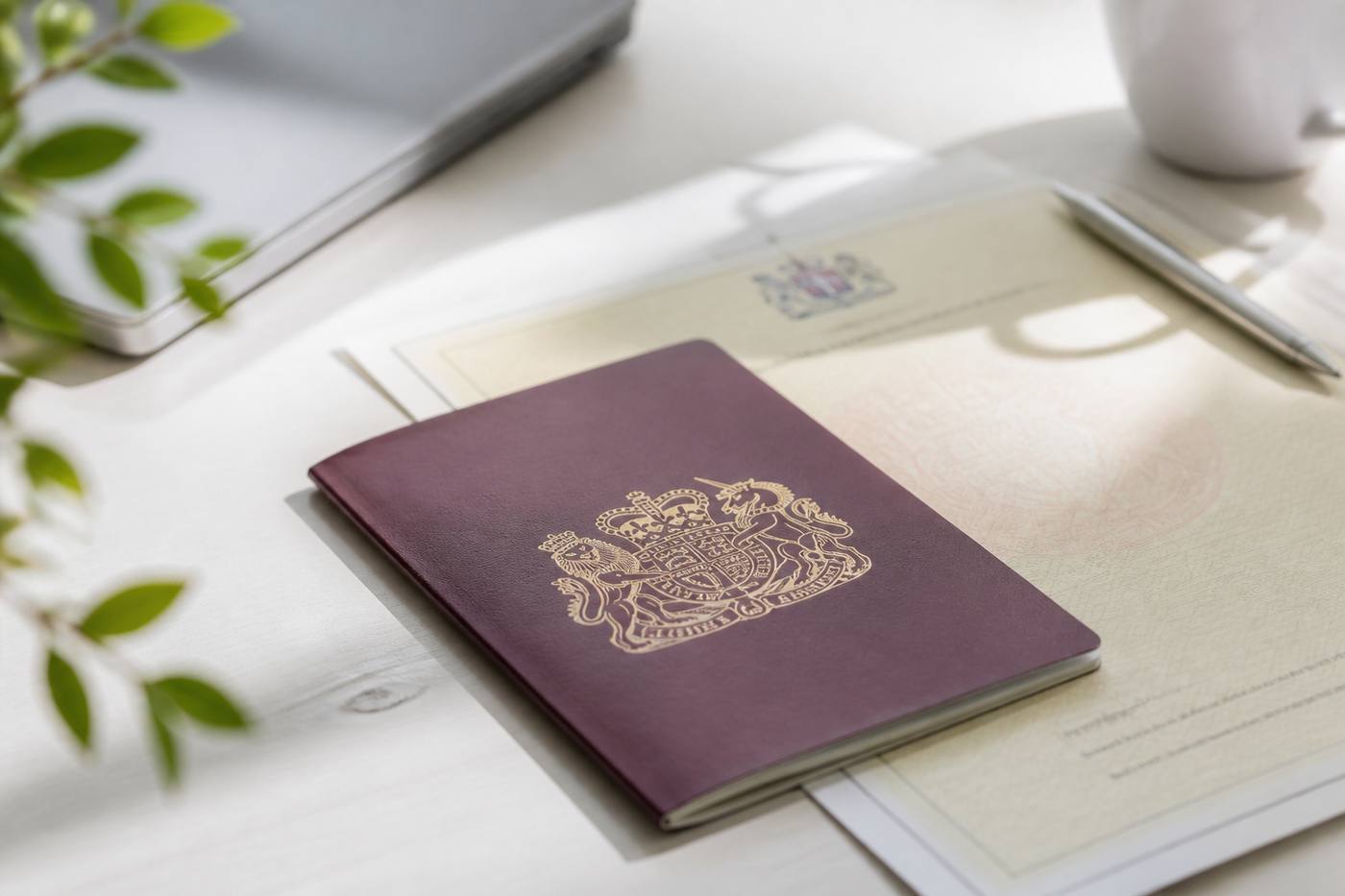
What is British Citizenship?
British Citizenship in 2026: Requirements, Fees and How to Apply
British citizenship is the end of the immigration road. Once you hold it, you are no longer subject to the Immigration Rules: no visa to renew, no salary threshold to meet, no Immigration Health Surcharge, and no risk that a change of policy alters your right to be here. You can hold a British passport, vote, and leave the country for as long as you like without losing your status.
Getting there is a paperwork exercise with a low tolerance for error. Most refusals are not close calls on the law — they are absences miscounted, a referee who did not qualify, an unspent conviction not declared, or an application made a few weeks before the applicant was actually eligible. The fee is not refunded when an application fails.
This guide sets out who qualifies, what the Home Office actually tests, what it costs, how long it takes, and where applications go wrong. It is written by Worldwide Immigration Ltd, regulated by the Immigration Advice Authority (IAA reference F201900032), with offices in London and Farnborough.
Fees and requirements on this page were checked against GOV.UK on 31 August 2026. Home Office fees and rules change frequently — always verify current figures before you apply, or ask us to.
The five routes to British citizenship
People use "applying for citizenship" to mean one specific route, but there are five, and they have different tests, different fees and different forms. Getting the route wrong is an expensive mistake.
1. Naturalisation as an adult
The main route. You are over 18, you hold indefinite leave to remain or settled status, you have lived here long enough, and you meet the residence, character, English and Life in the UK requirements. There are two versions: the standard five-year route, and the shorter three-year route for spouses and civil partners of British citizens.
2. Naturalisation as the spouse or civil partner of a British citizen
The same process, with a shorter qualifying period and more generous absence allowances. Critically, it also removes the twelve-month wait after you receive indefinite leave to remain — spouses can apply the day their ILR is granted.
3. Registration of a child
Children under 18 register rather than naturalise, usually on form MN1. Some children are entitled to registration; for others it is at the Home Office's discretion. Children born in the UK to parents who later settle here are the most common case. The good character requirement applies from age ten.
4. Citizenship by descent
You may already be a British citizen without knowing it, through a parent or in some cases a grandparent. If so, you do not apply for citizenship at all — you apply for a passport, or for a certificate confirming what you already hold. This is far cheaper than naturalising, and it is worth checking before you assume you need to apply.
5. Right of abode
A smaller category, mostly relevant to certain Commonwealth citizens. It gives the right to live and work in the UK free of immigration control without conferring citizenship. It is evidenced by a certificate of entitlement in your passport.
If you are not sure which of these applies to you, that is the first question to settle — and the cheapest one to get right.
The five routes at a glance
| Route | Who it is for | Qualifying period | Key point |
|---|---|---|---|
| Naturalisation (standard) | Adults with ILR or settled status | 5 years, plus 12 months holding ILR | The 12-month wait after ILR catches many people out |
| Naturalisation (spouse) | Spouses and civil partners of British citizens | 3 years | No 12-month wait after ILR; more generous absence limit |
| Registration of a child | Under-18s | Varies by entitlement | Good character applies from age 10 |
| Citizenship by descent | People with a British parent or, in some cases, grandparent | Not applicable | You may already be a citizen — apply for a passport, not for citizenship |
| Right of abode | Certain Commonwealth citizens | Not applicable | Freedom from immigration control, but not citizenship |
Citizenship or indefinite leave to remain — what is the difference?
People often reach settled status and wonder whether citizenship is worth the fee. The honest answer is that indefinite leave to remain is a good place to be, and citizenship is a materially better one.
Indefinite leave to remain is a form of immigration status. It can be lost. Spend more than two years continuously outside the UK — five years for EU Settlement Scheme settled status — and it lapses. It can be revoked following serious criminality, and it does not protect you from future changes to the Immigration Rules.
British citizenship is not an immigration status at all. It cannot lapse through absence, it does not appear in the Immigration Rules, and it is only removable in genuinely exceptional circumstances. It carries a British passport, the right to vote in general elections, eligibility for roles restricted to British nationals, and the ability to pass citizenship to children born abroad.
For most people who intend to stay, citizenship is the more secure position — and, given the proposals currently under consultation on settlement periods, the more predictable one.
Can I keep my existing nationality?
The UK permits dual and multiple citizenship. Becoming British does not, as a matter of UK law, require you to give up any other nationality you hold.
The question is what your other country does. Some states automatically withdraw their nationality when a citizen naturalises elsewhere; some require formal renunciation; some permit dual nationality without restriction. India, for example, does not permit dual citizenship, and Indian nationals who naturalise as British must surrender their Indian passport, though the Overseas Citizen of India scheme offers a partial substitute.
Check the position under the law of your country of origin before you apply, not after. It is not a question the Home Office will answer for you, and the consequences — for property rights, inheritance and visa-free travel to your home country — can be significant.
Naturalisation: the core requirements
Every naturalisation application is tested against the same set of requirements. All of them must be met on the date you apply.
Immigration status
You must hold indefinite leave to remain, settled status under the EU Settlement Scheme, or indefinite leave to enter.
On the standard route you must have held that status for at least twelve months before you apply. This catches a great many people out: they receive ILR, feel they have arrived, and apply immediately. The application is refused and the fee is gone.
If you are married to or the civil partner of a British citizen, the twelve-month wait does not apply. You can apply as soon as you hold settled status.
Residence and absences
This is where most avoidable refusals happen, because the rules are arithmetic and unforgiving.
Standard five-year route. You must have been in the UK for five years before the date of application, and in that period you must not have been outside the UK for more than 450 days in total, nor more than 90 days in the final twelve months. You must also have been physically present in the UK on the day exactly five years before the Home Office receives your application.
Three-year spouse route. Three years' residence, with a limit of 270 days outside the UK across those three years and, again, 90 days in the final twelve months. The same rule about physical presence applies, three years back.
Count the days properly. Count every trip, including short breaks, and count both the day you left and the day you returned unless you are certain of the counting convention that applies to your case. If you are close to a limit, the safest move is usually to wait rather than to argue. The Home Office has a discretion to overlook excess absences, but it is exercised sparingly and you should not build an application on the hope of it.
Good character
There is no statutory definition, which is precisely what makes this requirement difficult. The Home Office considers criminality, but also immigration history, financial affairs, honesty in dealings with government, and conduct that it considers makes a person unfit to be a citizen.
Things that regularly cause problems, and that people frequently fail to declare:
- Convictions and cautions, including those spent under the Rehabilitation of Offenders Act — for nationality purposes, spent convictions still have to be declared
- Fixed penalty notices and driving offences, particularly a pattern of them
- Any period of overstaying, illegal working, or entry without leave in the previous ten years
- Deception in a previous immigration application, however minor it seemed at the time
- Unpaid tax, undeclared self-employment income, or a discrepancy between what was declared to HMRC and what was declared to the Home Office
- Bankruptcy, unpaid court judgments or a history of non-payment of NHS charges
The rule of thumb is simple: declare everything, and explain it. A disclosed and explained issue is frequently survivable. The same issue discovered by the Home Office after you failed to disclose it is treated as deception, and deception findings can bar an application for ten years.
English language
You must show knowledge of English, Welsh or Scottish Gaelic at CEFR level B1 or above. You can meet it by:
- Passing an approved Secure English Language Test at B1 or higher, at an approved test centre
- Holding a degree taught or researched in English — including UK degrees, and overseas degrees confirmed by Ecctis as equivalent and taught in English
- Being a national of a majority English-speaking country recognised for this purpose
You may be exempt if you are 65 or over, or where a long-term physical or mental condition prevents you from meeting the requirement, which must be evidenced by a medical professional on the prescribed form.
If you met an English requirement for an earlier visa, do not assume it carries over. Check the level, the test provider and whether the certificate is still valid for nationality purposes.
Life in the UK test
A 24-question multiple-choice test taken at an approved centre, based on the official handbook. You need 75% to pass. You can retake it as often as you need, but you must wait seven days between attempts and pay the fee each time.
The pass is valid indefinitely, so a test you passed for your ILR application still counts. Keep the unique reference number — you will need it.
The same exemptions apply as for English: under 18, 65 or over, or a qualifying medical exemption.
Intention and residence
You must intend to make your principal home in the UK, or to work in Crown service or for a UK-established organisation. This is rarely contentious, but a pattern of long absences combined with a home and job abroad can raise it.
What it costs
The headline figure most people quote is out of date. As at 31 August 2026, the fee for naturalisation as an adult is:
- £1,709 — the application fee
- £130 — the citizenship ceremony fee
- £1,839 — total
Biometrics — fingerprints and a photograph — are collected free of charge. Beyond the Home Office fee you should budget for the Life in the UK test, an English test if you need one, an Ecctis assessment if you are relying on an overseas degree, document translation, and a passport once you are registered.
Fees for registering a child differ from adult naturalisation and change regularly, so check the current Home Office fee table before you apply. Fee waivers are available for some child registration applications where the child or their family cannot afford the fee.
The fee is not refunded if your application is refused. That single fact is the strongest argument for getting the eligibility assessment right before you file rather than after.
How long it takes
The Home Office aims to decide naturalisation applications within six months. In practice many are decided considerably faster, and a minority — usually those involving complex character issues, gaps in immigration history or checks with other departments — take longer.
After a decision to grant, you will be invited to a citizenship ceremony, which must normally be held within three months. The certificate is issued at the ceremony, and only then can you apply for a British passport. Build that tail into any travel plans.
For a fuller breakdown of British citizenship processing times in 2026 — including the six-month standard, optional priority, ceremony timing and common delays — see our timeline guide.
The application itself
Referees
You need two referees who have known you personally and who are not related to you, your solicitor or your adviser. One must be a person of professional standing. The other must generally be a British citizen aged 25 or over. Referees must have known you for at least three years, and they are asked to confirm your identity and that the information you have given is true.
Referee errors are a common and entirely avoidable cause of delay. Check that each referee actually meets the criteria before you name them, and give them warning that the Home Office may contact them.
Documents
The exact list depends on your route, but expect to provide:
- Your passport, and any previous passports covering the qualifying period
- Proof of your settled status or indefinite leave to remain, including your eVisa or UKVI account details
- Your Life in the UK test pass reference
- Your English language evidence
- Evidence of residence across the qualifying period — employment records, tax records, tenancy or mortgage documents, council tax, GP records
- A full list of absences with dates
- Marriage or civil partnership certificate and your partner's proof of British citizenship, on the spouse route
- Evidence relating to anything disclosed under good character
Submitting
Applications are made online, followed by a biometric appointment at a UKVCAS service point where documents are usually scanned. Since the move to digital status, most applicants no longer send physical documents to the Home Office — but the quality of what you upload matters, because a caseworker who cannot read a document will either request it again or decide without it.
If your application is refused
There is no right of appeal against a refusal of naturalisation. The routes are narrower and it pays to know them before you apply:
- Reconsideration. You can ask the Home Office to reconsider using Form NR. The Home Office expects a reconsideration request within six months of the decision (fee £513 as at 21 September 2026). This is the normal first step where the refusal rests on a mistake of fact or a misreading of your evidence. A fee applies.
- Judicial review. Available where the decision is unlawful, irrational or procedurally unfair — not simply because you disagree with it. It is expensive and time-limited.
- Reapplying. Frequently the most sensible option, once the reason for refusal has been fixed. But a refusal on good character grounds involving deception can bar a further application for ten years, so the reason matters enormously.
If you have been refused, get the decision letter reviewed before you do anything. The right response depends entirely on which requirement failed and why.
For a plain-English walkthrough of grant versus refusal letters, see our guide to the British citizenship decision letter. For options after refusal, see What Are Your Options If Your Citizenship Application Is Refused. Worldwide Immigration Ltd are IAA-regulated immigration advisers (ref F201900032), not solicitors.
What is changing, and what is not
There has been a great deal of coverage of proposed changes to settlement and citizenship, and a good deal of confusion about what is actually in force. As at 31 August 2026:
Confirmed. A higher English language standard of CEFR level B2 takes effect from 26 March 2027 for a number of settlement routes. If you are planning around an English test, this date matters.
Proposed, not law. The May 2025 Immigration White Paper and the November 2025 command paper A Fairer Pathway to Settlement floated extending the standard qualifying period for settlement from five years to ten, with shorter periods for higher earners and longer ones for some lower-paid roles. The consultation closed on 12 February 2026. No implementation date has been confirmed, and any change would require a Statement of Changes to the Immigration Rules. Transitional protection for people already in the UK remains undecided.
The practical point: if you are close to eligibility under the current rules, the case for applying sooner rather than later is stronger than it has been for some years. But nobody should make an irreversible decision on the basis of a proposal that is not yet law. If you want to know how the proposals would affect your particular timeline, ask.
Where applications go wrong
In our experience, the recurring causes of refusal and delay are these:
- Applying before the twelve months are up. The single most common avoidable error on the standard route.
- Miscounted absences. Usually a forgotten short trip, or counting only whole days abroad.
- Non-disclosure. A spent conviction, a fixed penalty, a period of overstaying — omitted because it seemed irrelevant, then treated as deception.
- Tax discrepancies. Self-employment income declared differently to HMRC and to the Home Office.
- Referees who do not qualify. Not known you long enough, related to you, or not of the required standing.
- Stale English evidence. A certificate from an unapproved provider, or below B1.
- Choosing the wrong route. Most painfully, naturalising at full cost when you were already a British citizen by descent.
How we can help
Worldwide Immigration Ltd is regulated by the Immigration Advice Authority (IAA reference F201900032). We advise on British citizenship from our offices at 124 City Road, London EC1V 2NX and Arena Business Centre, Farnborough GU14 7NA.
A citizenship instruction with us normally covers an eligibility assessment against every requirement before anything is filed, an absence audit against your travel history, a candid view on any good character issue and how to present it, a document review, and preparation of the application and supporting representations.
Where we think you are not yet eligible, we will tell you that, and when to apply instead. Where we think you may already be a British citizen by descent, we will tell you that too — it is a cheaper answer, and it is the right one.
To discuss your case: call +44 (0)203 4882 308, WhatsApp +44 7360 271841, or email inquiry@worldwideimmigration.co.uk.
This page is general information, current as at 31 August 2026, and is not legal advice. The Immigration Rules, Home Office guidance and fees change frequently and must be verified at the time of any application. Worldwide Immigration Ltd is regulated by the Immigration Advice Authority (IAA Ref: F201900032).